Cart
0
Every festive season brings the same happy problem: you need an outfit that feels special, photographs well, lets you sit through a long family puja and still looks fresh at the end of the night. For most of us, festive suits for women are the answer, because a well-chosen suit set is dressy without being heavy, traditional without being predictable, and far easier to wear for hours than a saree or lehenga. This guide walks you through the styles, fabrics, colours and fitting decisions so that you can walk into the shop (or onto a video call) already knowing what you want.
We see women shopping for suits at our shop on Nai Sarak, Chandni Chowk, every single day of the week, and the same questions come up again and again. Which cut flatters me? Is tissue too stiff for Diwali night? Can I wear pastels to a wedding? Should I buy ready-made or get it stitched? Let us answer them one by one.
What Makes a Suit "Festive"?
A festive suit is not just a suit with a little shine on it. Three things separate it from daily or office wear: the fabric has body and sheen or a rich fall, the embellishment is intentional (cutdana, sequins, zari, mirror, pearls, dabka), and the set is styled as a complete look with a dupatta that actually contributes to the outfit.
Embellishment: know the vocabulary
When you browse, you will see a long list of work names. A quick decoder helps:
- Cutdana: tiny faceted beads that catch light softly. Elegant and not too loud, good for evening events.
- Sequins: flat, shimmering discs. They bring instant sparkle and photograph beautifully.
- Zari: metallic thread work that gives a classic gold or silver glow, especially lovely on tissue and silk.
- Dabka: coiled metallic wire embroidery with a slightly raised, textured look. Very traditional, very bridal-family.
- Mirror work: small reflective pieces, perfect for mehendi, sangeet and Navratri-style evenings.
- Pearl and moti work: soft, creamy and graceful, especially on pastel and jewel tones.
A useful rule: the more occasions a suit has to serve, the more restrained the work should be. Light cutdana and thread work can be styled up or down; heavy dabka and zari belong to one big evening.
Straight, Anarkali or Sharara: Which Silhouette Suits You?
The silhouette matters more than the colour. The wrong cut for your height or build will bother you all evening, however beautiful the fabric. Here is how the three popular festive styles compare, and where palazzo, farshi and gharara sets fit in.
| Style | Best for | Comfort when sitting and walking | Works well on |
|---|---|---|---|
| Straight suit with palazzo or pants | Pujas, office Diwali parties, family lunches | Very easy, light, no fuss with the hem | Most body types, especially if you want a clean line |
| Anarkali | Weddings, receptions, formal dinners | Comfortable, but the flare needs space when you walk up stairs | Pear and apple shapes, and anyone who wants the waist softly hidden; taller women carry floor-length best |
| Sharara or gharara set | Mehendi, sangeet, festive evenings | Fun and flowy, you will want to twirl; needs practice on stairs | Petite and medium heights with a shorter kurta; taller women with a longer one |
| Peplum or short kurta set | Cocktail evenings, younger styling, Karwa Chauth | Easy to move in | Hourglass and rectangle shapes |
The straight suit: modern and easy
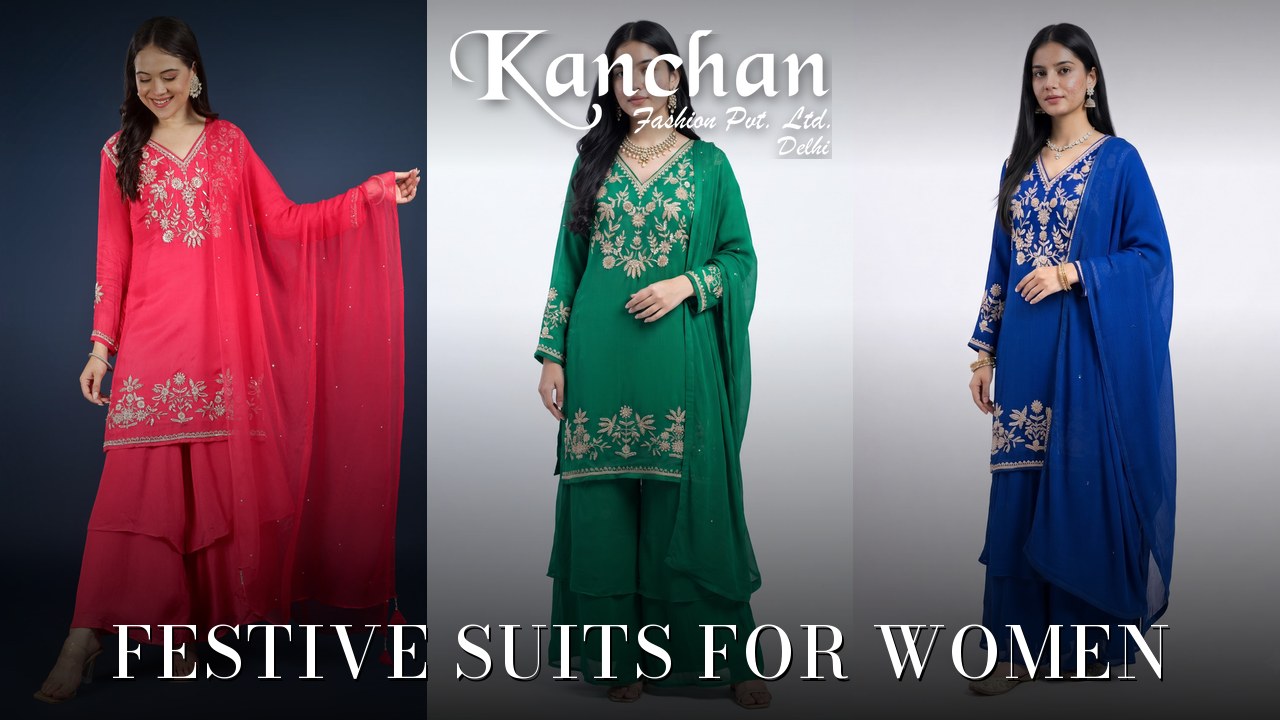
A straight kurta with palazzo, pants or a farshi salwar is the quietest of the festive options, and for that reason it is often the smartest buy. It sits well across the shoulders, does not trap you in a car or an auto, and lets the embroidery do all the talking. Palazzo sets give you a column of colour that looks long and elegant, particularly if your kurta and bottom match or sit one shade apart.
The farshi salwar, with its wide, softly flared legs, adds a hint of old-world Lucknowi grace to a straight kurta. It is a good pick if you find palazzo too casual but a full sharara too much.


The Anarkali: the wedding classic
Nothing says wedding season like a flared Anarkali with a fitted bodice and a generous fall. The flare creates movement and drama in photographs, and the fitted upper half keeps the look elegant. Choose the length with care: floor-length is the most formal, but ankle-length is far easier at a crowded function. If you are shorter than about five feet three, a vertical panel, a slightly raised waistline or a monochrome set will stop the volume from overwhelming you.
Anarkalis are also the most forgiving for fit. A good tailor can take in the bodice and leave the flare untouched, which is one reason many women buy them in unstitched form (more on this below).
The sharara: made for celebrations
A sharara has a fitted or knee-length flare that opens into wide, pleated legs. The gharara is its older cousin, with the flare starting at the knee with a gathered, structured join. Both bring a festive spirit that no straight suit can match, which is why they dominate mehendi and sangeet functions.
The trick with a sharara is balance. Because the bottom carries a lot of volume, keep the kurta shorter or closely fitted and let the dupatta fall in clean lines. If the sharara is heavily worked, choose a plain-ish dupatta; if the kurta is the star, a lightly embellished sharara is enough.


Peplum and Indo-western sets: for a younger, sharper look
If long kurtas feel too traditional for the evening you have in mind, a peplum top with a matching bottom is a clean, flattering choice. The flared hem skims the hips and balances broad shoulders or a narrow waist. It pairs well with a dupatta draped on one shoulder, or even a contrasting one, and works for Karwa Chauth, office Diwali celebrations and cocktail dinners.


Choosing the Right Fabric for Festive Suits
Fabric decides how a suit looks, how it falls and how you feel after four hours in it. Delhi's weather also matters: October and November evenings are pleasant, but a crowded wedding hall can feel warm, while a December wedding may call for something with more body and a shrug or shawl.
Chinon: light, graceful and easy to wear
Chinon is a lightweight, slightly crinkled fabric with a soft sheen and good drape. It carries cutdana, sequins and pearl work very well without feeling heavy, which makes it one of the most practical festive suit fabrics. It is comfortable for long hours and takes colour richly, so deep reds, bottle greens and royal blues look especially good. Because it is delicate, handle embellished chinon with care: store it folded in soft cloth and avoid rough hooks or sharp jewellery clasps on the neckline.
Tissue: the glow of a festival evening
Tissue has a fine, metallic shimmer woven through it, so even an outfit with simple embroidery looks luminous under lamps and fairy lights. It has more structure than chinon, so it holds an Anarkali flare or a straight cut beautifully. The trade-off is that it can feel a little crisp, so make sure the lining is soft and the neckline does not scratch. Tissue is the fabric many women choose for Diwali puja evenings because it feels celebratory without needing much else.
Organza and net: airy and romantic
Organza gives a sheer, crisp, floating look, and is lovely in pastel shades for day weddings and engagement lunches. Net dupattas with embroidered borders lighten a heavy kurta. Both fabrics snag easily, so avoid sitting on rough surfaces and keep your bangles away from the edges.
Georgette and crepe: forgiving and flowing
Georgette is a classic for a reason: it flows, it does not crease much and it hides minor fit issues. Crepe has a slightly heavier, matte feel and looks sophisticated in solid colours. Choose these when you want movement and an easy-care outfit for several events through the season.
Silk, raw silk and muslin-silk blends
Silk and raw silk have a rich, slightly textured appearance that suits traditional functions. They are warmer to wear, so they are better for winter weddings and daytime rituals. Muslin and mul cotton are the opposite: breathable and light, ideal for early-festival daytime events or Chikankari-style suits for family lunches.
Quick fabric guide by occasion
| Fabric | Feels like | Best occasion |
|---|---|---|
| Chinon | Light, soft sheen | Diwali evenings, sangeet, long functions |
| Tissue | Structured, metallic glow | Puja, receptions, evening weddings |
| Organza | Crisp, sheer, airy | Day weddings, engagement, pastel looks |
| Georgette / crepe | Flowing, easy-care | Multiple small functions, travel |
| Silk / raw silk | Rich, warmer | Winter weddings, traditional rituals |
| Mul cotton / muslin | Breathable, light | Daytime family gatherings, Chikankari looks |


Colour Ideas by Occasion
Colour is where festive dressing becomes personal. These are the combinations that work year after year, along with a few that are easy to get wrong.
Diwali
Diwali is about light, so jewel tones and warm metallics shine here: deep red, rani pink, bottle green, royal blue, mustard and gold. If you are lighting diyas and doing rangoli, pick a colour that lets you move comfortably in it: chinon or georgette in a rich shade is better than a stiff, heavy set. For the Lakshmi puja itself, many families prefer red, yellow, pink or green, while very dark shades such as black are traditionally avoided by some households, so it is worth asking at home before you decide.
Weddings: as a guest
For a wedding, think about the time of day and the function. Daytime ceremonies suit pastels such as peach, mauve, dusty pink and sky blue. Evening receptions suit deeper jewel tones, wine, emerald and navy, or tissue with zari. Avoid white and very pale ivory unless the family has said otherwise, and avoid dressing in the same bridal red as the bride's own function.
Mehendi and haldi
Mehendi welcomes green, parrot green, teal, turquoise and bright pink. Haldi is almost always yellow, mustard or orange, and you should choose something you will not mind getting a little stained. Fabrics such as georgette and crepe in yellow or mustard are popular choices, and an easy-wash cotton blend is wise if you will be in the thick of the haldi rituals.
Sangeet and cocktail evenings
This is where you can be bold: sequins, mirror work, wine, black with gold, deep teal and shimmering tissue. A sharara or gharara set in a rich colour is the natural pick for dancing.
Karwa Chauth, Eid and family functions
Karwa Chauth leans traditional: red, maroon, rani pink and deep green with gold work. For Eid gatherings, pastel mint, powder blue, ivory-gold and soft pink are all lovely. For ordinary family functions and naming ceremonies, a mid-weight chinon or georgette in a colour that flatters your complexion, and with moderate work, is the safest and smartest choice.
Flattering colours and your skin tone
- Fair skin: emerald, wine, navy, mustard and rich pastels all work; avoid very washed-out shades that blend into your skin.
- Wheatish skin: almost everything works, particularly peach, teal, rani pink, mint, olive and royal blue.
- Dusky to deep skin: bright fuchsia, mustard, gold, turquoise, ivory-gold and deep red look striking; be careful with beige tones that are close to your own shade.
These are guidelines, not rules. The best way to be sure is to see the fabric in real light. That is exactly why we offer video-call shopping: you can ask us to show the suit in daylight and under a tube light, and decide before you commit.
Stitched, Semi-Stitched or Unstitched: How to Decide
Many women are surprised by how much the choice between ready-made and unstitched changes the experience. There is no universally right answer; it depends on your timeline, your tailor and how particular you are about fit.
Ready-made (stitched) suits
Stitched sets are the fastest route to an outfit. You try the size, check the drape and wear it. They suit women whose measurements fall comfortably into standard sizes, and anyone shopping close to the function date. Always check the margin: ask whether there is extra fabric in the seams that a tailor can let out or take in for small corrections.
Semi-stitched suits
Semi-stitched suits come with the kurta partly constructed (usually the embroidered front and back panels are cut and the rest is left for your tailor to finish) so you get a custom fit without starting from nothing. This is a good middle path if you are petite, tall, or have a figure that standard sizing does not fit well.
Unstitched suits
Unstitched fabric gives you the most freedom: you choose the neckline, sleeve length, slits, lining and whether you want a straight cut or an Anarkali. The cost is time. Allow enough days for your tailor, plus a trial and alteration round, especially in festive season when tailors are booked solid. Unstitched is also the best option when the fabric itself is the attraction, as with Chikankari, mul cotton or a beautifully woven tissue.
| Stitched | Semi-stitched | Unstitched | |
|---|---|---|---|
| Time needed | Minimal | Moderate | Longest |
| Fit control | Limited to alterations | Good | Full |
| Design freedom | None | Some (neck, sleeve, length) | Complete |
| Best if | You are short on time | You want custom fit without a long process | You have a trusted tailor and time |


How to Get a Good Fit
A moderately priced suit that fits perfectly will always look better than an expensive one that does not. A few details matter more than anything else.
Shoulders and bust first
Alterations can fix length and waist, but shoulders are hard to rework. When trying a suit, check that the shoulder seam sits at the edge of your shoulder bone and that you can raise your arms without the whole kurta lifting. If the bust is tight, the embroidery will pull and distort, so ask for a size up and have the waist taken in instead.
Armholes and sleeves
Heavy embellished sleeves restrict movement. Make sure you can hug someone comfortably and lift a plate. For a lot of festive work, three-quarter sleeves are the most practical choice.
Kurta length and bottom length
For straight kurtas, mid-calf to just below the knee is the most flattering for most heights. For palazzo and sharara, the hem should touch the top of your footwear without dragging; always measure while wearing the heels or flats you plan to wear that day. For Anarkali, wear the shoes while checking the floor length, as a half-inch can decide whether you trip on stairs.
The lining matters
A suit with sequins or zari on a rough lining will irritate your skin by the second hour. Ask about the lining and, if you are getting an unstitched suit stitched, tell your tailor to use soft cotton or satin lining beneath embroidered areas.
A checklist for the trial
- Sit, stand and raise your arms in the suit.
- Walk a few steps and check the hem and the bottom.
- Look at the back neckline and the zip or hooks.
- Check how the dupatta sits and whether it needs a pin.
- Take photos in good light and in the mirror.
Styling Your Festive Suit
Once the suit is chosen, a few styling decisions turn a good outfit into a memorable one.
The dupatta
Drape it over one shoulder for a clean, modern line, over both shoulders for a traditional look or pleated and pinned if you want it to stay in place during a long function. A net or organza dupatta is lighter on both the outfit and your neck. If the kurta is heavily worked, choose a simple dupatta, and the other way around.
Jewellery
Match jewellery to the work on the suit. Cutdana and pearl embroidery pair beautifully with pearl or polki jewellery. Mirror work and sequins go with oxidised silver or bold earrings. If the neckline is detailed, skip the necklace and wear statement earrings or jhumkas.
Footwear and bag
Choose comfortable juttis, block heels or embellished flats if you will be standing for hours. Leave the high stilettos for pictures. A small potli bag completes the look and keeps your hands free for plates and prasad.
Repeat-wearing a festive suit
One of the best things about a suit is that it can be worn more than once. A simple set in chinon or georgette can be restyled with a different dupatta, different jewellery or even a contrasting jacket. If you plan several functions in a season, buy one statement suit and one versatile suit rather than three similar ones.
Planning Your Purchase
The festive months get busy, and the best selections go quickly. A little planning keeps the process calm.
Shop early, but not too early
Start looking several weeks before the function so that you have time for alterations, matching accessories and a second look if you are unsure. At the same time, avoid buying months in advance if your size might change.
Visiting the market with a plan
Nai Sarak and the surrounding lanes of Chandni Chowk are a wonderful place to shop, but they are also crowded and busy, especially before Diwali. Come with a clear idea of occasion, colour range and rough budget. In the wider market, many buyers expect to bargain; at Kanchan Fashion, our prices are fixed and transparent, so what you see on the tag or the product page is what it is. That also means you can spend your time on what matters, which is fabric, fit and finish, rather than on negotiation.
Shopping on video call or online
If you cannot visit in person, whether you live in another part of Delhi, in another city or abroad, you can browse online at kanchanfashion.com or shop on a video call. Ask us to show you the suit up close: the embroidery, the lining, the inside seams and the dupatta. You can also look at our suits collection or the wider festive collection to compare options before you call.
Caring for embellished suits
- Dry-clean heavily embroidered, tissue and organza suits; do not wash them at home.
- Store folded in a muslin or cotton cloth, not in plastic, and refold along different lines now and then to avoid permanent creases.
- Put on perfume and hairspray before you dress, not after.
- Remove the suit as soon as the function ends and air it before storing.
A Simple Shortlist: Which Suit for Which Woman?
- You want something comfortable for a long Diwali evening: a chinon straight suit with palazzo in red, green or blue.
- You are attending a day wedding: a pastel organza or chinon set in peach, mauve or dusty pink.
- You are dancing at a sangeet: a sharara or gharara set with mirror and sequin work.
- You love tradition and a rich look: a tissue suit with zari and pearl embroidery.
- You are petite or tall and struggle with sizing: a semi-stitched or unstitched set tailored to you.
FAQs
Which fabric is best for festive suits for women in the Delhi season?
Chinon and georgette are the most practical for October and November evenings because they are light and drape well, while tissue gives a richer festive glow and holds its shape. For December weddings, silk and raw silk, or a suit paired with a shrug or shawl, keep you warmer.
Is an Anarkali or a sharara better for a wedding?
Both work. An Anarkali is the more formal and traditional choice for the main ceremony or reception, and a sharara is livelier for mehendi and sangeet. Choose based on how much you plan to move around and dance.
Should I buy a stitched suit or get it stitched myself?
If you are short on time or fit standard sizes, a ready-made suit is the easier option. If you want exact fit or a custom neckline and have time for a trial and alteration, an unstitched or semi-stitched suit gives you more control.
Can I wear black or white to a festive function?
Black is stylish for evening receptions and cocktail events, but some families avoid it for puja days, so check first. White and very pale ivory are best avoided at weddings unless the dress has strong colour or gold work, or the family has said it is fine.
Can I see the suit on a video call before buying?
Yes. You can shop with us on a video call and ask to see the fabric, embroidery and lining up close. The shop at Shop No. 773, Nai Sarak, Chandni Chowk, is open all 7 days if you prefer to visit in person.
Can I bargain on the price in the shop?
No. Kanchan Fashion is a fixed-price shop, so prices are transparent and the same for everyone. There is no bargaining, and you can concentrate on choosing the suit that suits you best.
The right festive suit is the one that makes you forget about the outfit and enjoy the evening. Start with the occasion, pick a silhouette and fabric that you can move in, choose a colour you love in real light, and get the fit right. Do that, and every Diwali, wedding and family function this season becomes easier to dress for.
Visit Kanchan Fashion in Chandni Chowk
Shop No. 773, Nai Sarak, Chandni Chowk, Delhi · Open all 7 days
📍 Get directions on Google Maps
Can't come to the store? Shop live with our team on a video call.