Cart
0
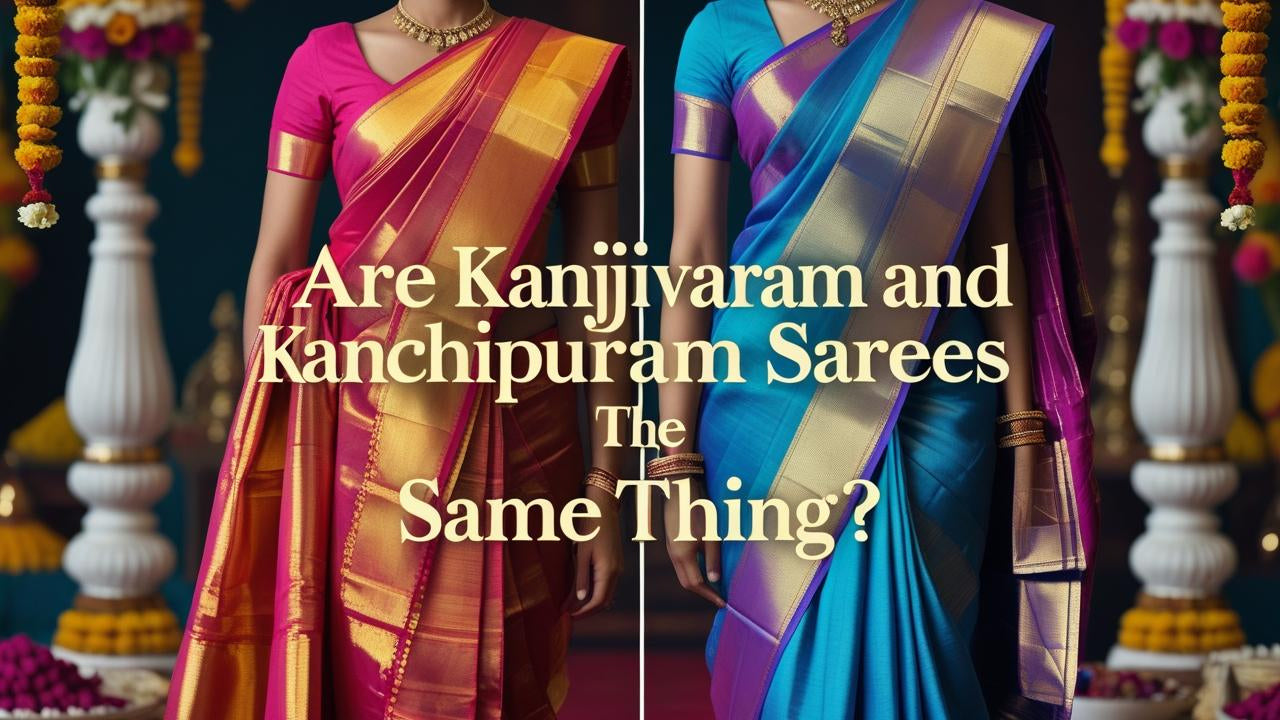
Are Kanjivaram and Kanchipuram Sarees the Same Thing?
Table of Contents
-
Introduction
-
What are Kanjivaram Sarees?
-
What are Kanchipuram Sarees?
-
Differences between Kanjivaram and Kanchipuram Sarees
-
Weaving Technique
-
Design Patterns
-
Usage of Zari
-
-
Similarities between Kanjivaram and Kanchipuram Sarees
-
Silk Fabric
-
Traditional Craftsmanship
-
-
Which One Should You Choose?
-
Where to Buy Kanjivaram and Kanchipuram Sarees?
-
How to Identify Authentic Kanjivaram and Kanchipuram Sarees?
-
Care and Maintenance Tips for Kanjivaram and Kanchipuram Sarees
-
Conclusion
-
FAQs
Introduction
When it comes to traditional Indian attire, sarees hold a special place in every woman's wardrobe. Kanjivaram and Kanchipuram sarees are two of the most sought-after varieties of silk sarees in India. While many people use the terms interchangeably, there are some subtle differences between the two.
What are Kanjivaram Sarees?
History of Kanjivaram Sarees
Kanjivaram sarees, also known as Kanchipuram sarees, originated from the town of Kanchipuram in Tamil Nadu. These sarees are crafted using pure mulberry silk threads and are renowned for their rich colors, intricate designs, and durability.
Features of Kanjivaram Sarees
-
Wide contrasting borders with traditional motifs
-
Heavy weight and stiff texture
-
Motifs often include peacocks, elephants, and flowers
What are Kanchipuram Sarees?
History of Kanchipuram Sarees
Kanchipuram sarees are also woven in Kanchipuram and are considered a symbol of South Indian culture. Made from pure mulberry silk, they are celebrated for their exquisite craftsmanship and intricate designs.
Features of Kanchipuram Sarees
-
Temple borders with checks or stripes patterns
-
Uniquely designed pallu with motifs from nature and mythology
-
Use of real silver and gold zari for embellishments
Differences between Kanjivaram and Kanchipuram Sarees
Weaving Technique
-
Kanjivaram Sarees: Woven using the korvai technique, where the body and border are woven separately and then interlocked.
-
Kanchipuram Sarees: Woven on a pit loom in a single weave process.
Design Patterns
-
Kanjivaram Sarees: Intricate motifs inspired by nature and temple art.
-
Kanchipuram Sarees: Geometric motifs like checks, stripes, and floral designs.
Usage of Zari
-
Kanjivaram Sarees: Gold zari is predominantly used, giving a royal look.
-
Kanchipuram Sarees: A combination of silver and gold zari for a unique style.
Similarities between Kanjivaram and Kanchipuram Sarees
Silk Fabric
Both are made from pure mulberry silk, known for its luster and durability.
Traditional Craftsmanship
Both are handwoven by skilled artisans, passed down through generations, making them true works of art.
Which One Should You Choose?
-
Choose Kanjivaram Sarees if you prefer traditional motifs and heavy borders.
-
Choose Kanchipuram Sarees if you like geometric patterns and intricate pallus.
Where to Buy Kanjivaram and Kanchipuram Sarees?
For authentic sarees, Kanchan Fashion is among the best saree stores in India, offering a wide range of designs and colors.
How to Identify Authentic Kanjivaram and Kanchipuram Sarees?
-
Look for authenticity tags and pure silk markings
-
Check for intricate weaving patterns
-
Genuine sarees have a distinct feel and sheen
Care and Maintenance Tips
-
Dry clean to maintain luster and color
-
Store in a cool, dry place away from sunlight
-
Avoid spraying perfumes directly on the saree
Conclusion
Both Kanjivaram and Kanchipuram sarees are timeless symbols of Indian craftsmanship. Whether you choose the traditional richness of Kanjivaram or the refined elegance of Kanchipuram, each is a masterpiece worth owning.
FAQs
1. Are Kanjivaram and Kanchipuram sarees made from the same silk?
Yes. Both use pure mulberry silk known for its quality and durability.
2. Can they be worn for special occasions?
Absolutely! Perfect for weddings, festivals, and grand events.
3. What’s the average cost?
Ranges from a few thousand to several lakhs, depending on silk quality, design, and zari work.
4. How to spot a genuine saree?
Check tags, silk purity, and weave quality.
5. Can they be worn regularly?
While mostly for special occasions, they can be worn anytime you want an elegant look.